Domestic certification
Compliance assessment of products, services, etc. based on domestic laws, regulations, and standard systems



Project Background
On May 23, 2023, the State Administration for Market Regulation issued the national standard G8 42590-2023 "Safety Requirements for Civil Unmanned Aerial Vehicle Systems", which was officially implemented on June 1, 2024.
This standard applies to micro, light, and small unmanned aerial vehicles other than model aircraft. The "Quality Inspection Project for Unmanned Aerial Vehicles" will be based on the national standard GB 42590-2023 "Safety Requirements for Civil Unmanned Aerial Vehicle Systems" and will undergo quality testing in accordance with the form of national product quality supervision spot checks.
Scope of application of the standard: development, production, delivery, and use of micro unmanned aerial vehicles, light unmanned aerial vehicles, and small unmanned aerial vehicles other than model aircraft.
Definition of drone classification:
1. Micro unmanned aerial vehicle: an unmanned aerial vehicle with an empty weight of less than 0.25kg, a maximum flight altitude of no more than 50m, a maximum level flight speed of no more than 40km/h, wireless transmission equipment that meets the requirements of low-power short-range technology, and can be manually controlled at any time throughout the entire process.
2. Light unmanned aerial vehicle: an unmanned aerial vehicle with an empty weight not exceeding 4kg, a maximum takeoff weight not exceeding 7kg, a maximum level flight speed not exceeding 100km/h, and the ability to maintain airspace and be reliably monitored in accordance with airspace management requirements. It can be manually operated at any time throughout the entire process.
3. Small unmanned aerial vehicle: an unmanned aerial vehicle with an empty weight not exceeding 15kg and a maximum takeoff weight not exceeding 25kg, possessing airspace maintenance capability and reliable monitoring capability that meet airspace management requirements, and can be manually operated at any time throughout the entire process.
Testing items:
1. Electronic fence: Light and small unmanned aerial vehicles should provide notifications, warnings, or automatically execute flight plans to unmanned aerial vehicle operators when they detect potential or ongoing conflicts with specific geographic areas.
2. Remote identification: Light and small unmanned aerial vehicles conducting flight activities should actively report identification information to the comprehensive supervision service platform through the network. Unmanned aerial vehicles should automatically broadcast identification information through wireless local area network (Wi Fi) or Bluetooth during flight.
3. Emergency response: When light and small unmanned aerial vehicles encounter unexpected situations during flight, they should have one or more response capabilities such as hovering/hovering in the air, returning, landing, and parachute deployment. In the event of navigation failure, notification or warning should be provided to the unmanned aerial vehicle operator.
4. Structural strength: It has sufficient strength and stiffness to withstand various specified load states, and the structure of unmanned aerial vehicles does not produce harmful deformation; When subjected to a load of 1.33 times the maximum takeoff weight, the main load-bearing structure of the unmanned aerial vehicle is not damaged.
5. Body structure: (1) The body and component structure of unmanned aerial vehicles should not have sharp edges that may cause harm to users during normal use or maintenance. (2) Micro and light unmanned aerial vehicles without blade protection devices should have blade designs that minimize scratches on personnel. Metal materials should not be used for blades
6. Whole machine drop: For micro and light unmanned aerial vehicles powered by lithium-ion batteries, the battery is adjusted to 30% ± 2% of full charge, and the unmanned aerial vehicle can freely fall vertically from a height of 10 meters without explosion or fire.
7. Power energy systems: Lithium ion batteries, hydrogen fuel cells, and fuel power systems should all meet corresponding safety requirements.
8. Controllability: The flight control system of light and small unmanned aerial vehicles should have the ability to limit and protect key flight parameters. The limitations of key flight parameters include maximum flight altitude limit and maximum level flight speed limit.
9. Error prevention: The mechanical interfaces of components such as batteries, motors, and blades of unmanned aerial vehicles should have error prevention functions.
10. Perception and Avoidance: Light and small unmanned aerial vehicles without blade protection devices should have perception and avoidance functions, including obstacle perception, warning prompts, and taking measures such as automatic hovering, avoidance, or landing.
11. Data link protection: Light and small unmanned aerial vehicles should be protected using information security technology to prevent unauthorized access to the link.
12. Electromagnetic compatibility: Light and small unmanned aerial vehicles should be able to ensure safe system operation in the electromagnetic environment in which they are used and operate, without interfering with public electromagnetic signals.
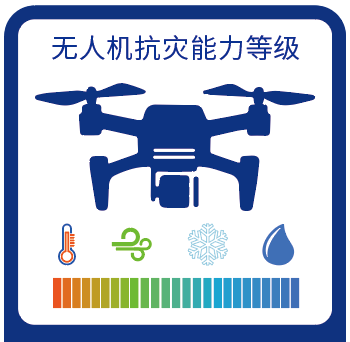
13. Wind resistance: Light and small rotary wing unmanned aerial vehicles should have the ability to ensure flight safety under sustained winds, gusts, and other conditions not exceeding a certain level.
14. Noise: Identify the noise measurement results of rotary wing unmanned aerial vehicles at hovering and typical flight speeds on the nameplate or instruction manual.
15. Lighting: Except for light and small unmanned aerial vehicles used for group performances and clearly marked for daytime flight only, heading lights should be installed.
16. Identification: Unmanned aerial vehicles should have unique product identification codes, risk warning signs, and classification identification symbols.
17. User manual: An electronic or paper user manual should be provided.





TEL:
Room 101, Building 1, No. 5 Jinzhong Road, Dongcheng Street, Dongguan City, Guangdong Province
© Copyright © 2026 Dongguan Hongding Energy Storage Testing Technolog