EU Certification
Ensure a compliance system that complies with the EU's unified safety, health, and environmental standards



GS certification and CE certification details
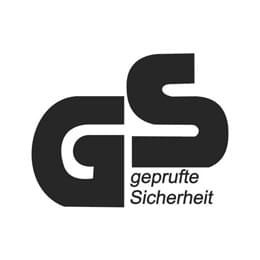
The meaning of GS is German "Gepruft Sicherheit" (safety certified), and it also means "Ger * * ny Safety" (German safety). GS certification is a voluntary certification based on the German Product Safety Law (GPGS) and tested according to the EU unified standard EN or German industrial standard DIN. It is a recognized German safety certification mark in the European market. What products can apply for GS certification? Household appliances such as refrigerators, washing machines, kitchen utensils, household machinery, sports equipment, electrical and electronic office equipment such as copiers, fax machines, shredders, computers, printers, industrial machinery, experimental measuring equipment, and other safety related products such as bicycles, helmets, ladders, furniture, etc.
CE certification is limited to the basic safety requirements of products that do not endanger the safety of humans, animals, and goods, rather than general quality requirements. The coordination directive only specifies the main requirements, while the general directive requirements are standard tasks.
The accurate meaning is that the CE mark is a safety conformity mark rather than a quality conformity mark. It is the 'main requirement' that constitutes the core of European directives. In the EU market, the CE mark is a mandatory certification mark because whether it is products produced by EU companies or other countries, if a product wants to circulate in the European market, the CE mark must be added to indicate that the product meets the basic requirements of the EU directive.
Difference between GS certification and CE certification
1. GS is a voluntary certification of non mandatory; CE is a mandatory certification for Compulsory;
2. GS is tested in accordance with German safety regulations; CE applies European standards (EN) for testing
3. GS is tested and issued a GS logo certificate by an independent third party authorized by Germany; CE can self declare CE on the premise of having complete technical documents (including reports)
4. GS must pay an annual fee; CE does not require annual fee payment
5. GS must conduct factory audits annually; CE does not require factory inspection
6. GS is issued by authorized units with high credibility and market acceptance; CE factory's self declaration of product conformity.
CE certification is a mandatory certification, and all power adapter products circulating to the European Union must pass CE certification. GS certification is a voluntary certification, which is also recognized by the European Union. So at this point, someone will definitely say that if that's the case, only CE certification is enough, there's no need to do GS certification. But in fact, this is not the case. Although the GS mark is not a mandatory requirement by law, it can indeed subject manufacturers to strict German (European) product safety laws in the event of product failure causing accidents. So the GS logo is also a powerful market tool that can enhance customers' confidence and purchasing desire.


TEL:
Room 101, Building 1, No. 5 Jinzhong Road, Dongcheng Street, Dongguan City, Guangdong Province
© Copyright © 2026 Dongguan Hongding Energy Storage Testing Technolog