Other
The company also provides a "one-stop" service for EMC design and countermeasures testing and certification of products in all fields.



1. Overview of Bluetooth BQB Certification
Before understanding Bluetooth BQB certification, we need to first understand the Bluetooth Special Interest Group (SIG): a company established by eight major wireless communication industry giants in 1998, specializing in Bluetooth specification development, technology promotion, and qualification certification. The Bluetooth SIG owns Bluetooth Trademarks and freely licenses its members to use Bluetooth wireless technology and its registered trademarks, but the corresponding products must pass Bluetooth qualification certification, also known as Bluetooth BQB certification. This means that all products with Bluetooth functionality must pass Bluetooth BQB certification; otherwise, the product will be deemed as infringement by the Bluetooth SIG. Currently, there are over 31,000 member companies in the Bluetooth SIG.
BQB Certification
However, not all products that support Bluetooth functionality are called Bluetooth products. Only those that have been tested and certified by the SIG (Special Interest Group, Bluetooth Special Interest Group) as compliant with Bluetooth standards are eligible to be marketed as Bluetooth products. Additionally, logos and identifiers such as BLUETOOTH and Bluetooth are registered trademarks of the Bluetooth SIG organization. Products must be certified by the SIG before they are authorized to use these logos and identifiers; otherwise, it is illegal.
II. BQB Certification Application Mode
BQB certification.jpg
1. QDL (Qualified Procedure) prototype (finished product) application
2. EPL Listing Type refers to the form of listing for Bluetooth BQB certification. For example, if a Bluetooth speaker finished product has already passed BQB certification, it is not necessary to reapply for BQB certification for the product. As long as authorization from the module supplier is obtained, the product can be uploaded to the BQB website in the form of a listing.
III. Materials required for QDL application
1. International certification application form;
2 . Block Diagram (方框图);
3 . Schematic (circuit schematic): The block diagram and circuit schematic should correspond, and all crystal oscillators should be indicated in the block diagram;
4 . Operational Description (description of working principle);
5 . PCB Layout (PCB layout diagram);
6 . Fixed-frequency software and debugging methods;
7. Product User Guide/Product Manual;
8. Bill of Materials (Components)/Component List;
9. Technical Data Sheet of Bluetooth Antenna / Bluetooth Antenna Specification (If the antenna is designed as a PCB antenna, the antenna gain value can be directly filled in on page 1 of this application form, and the antenna specification may not be required.);
IV. Materials required for EPL application
1. International Certification Application Form
2. Member account
3. The authorization letter/NDA (Non-Disclosure Agreement) will only be used when _PL.
4. DoC/SDoC (Declaration of Conformity/Supplier Declaration of Conformity) - Documents requiring signature will be provided during listing
5.1 complete machine
After the order is confirmed, the enterprise needs to purchase a DID number.
Note: One DID number is only for modules of one specification and for one company name; PL listing: The hardware design of the Bluetooth module has been fixed, and as long as the Bluetooth application (profile) is the same, it can be listed directly without testing.
V. Application Process
BQB application process
Note: When applying for Bluetooth BQB certification, a prerequisite is to obtain a registration number, namely the QDID number.
VI. Use of BQB trademark
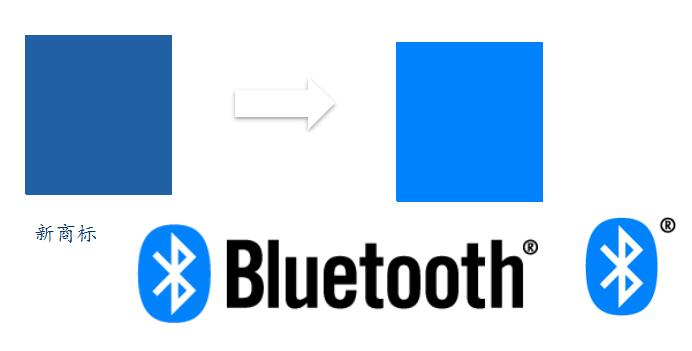
The background color of the figure mark (logo) has been adjusted from dark blue to bright blue, with the RGB ratio changed from [R:34, G:96, B:165] to [R:0, G:130, B:252]

TEL:
Room 101, Building 1, No. 5 Jinzhong Road, Dongcheng Street, Dongguan City, Guangdong Province
© Copyright © 2026 Dongguan Hongding Energy Storage Testing Technolog